


Peace Begins Quietly Within Us
How Calm, Faith, Nature & Kindness Can Transform Your Life—and Ripple Outward
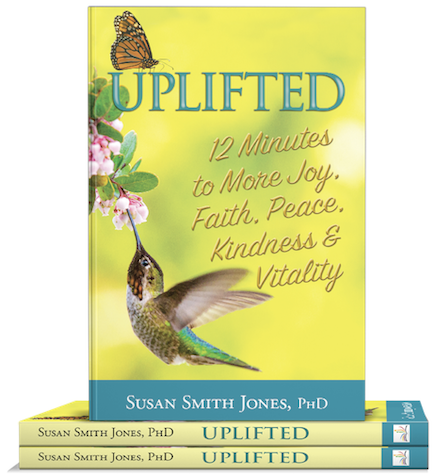 By Susan Smith Jones, PhD
Discover more about living with peace, purpose, and positivity in my book UPLIFTED, and visit my website’s homepage for today’s short “Daily Moments of Joy & Vitality” and "Today's Blessing & Affirmation." Return each day for fresh, new, uplifting healthy-living tips designed to brighten your outlook and inspire greater well-being!
Peace rarely enters our lives with  trumpets, fireworks and a marching band. More often, it arrives quietly—in one slower breath, one gentle prayer, one forgiving thought, one walk beneath an open sky or one decision not to answer irritation with more irritation.
We often imagine peace as something the world must give us: a cleared calendar, a cooperative family, a quiet neighbor, an empty inbox and perhaps a customer-service representative who answers on the first ring. But if we wait for every circumstance to become agreeable, we may be waiting until the angels issue us a forwarding address.
True peace begins within. It is not the absence of problems; it is the presence of an inner steadiness that helps us meet problems without becoming one ourselves. It does not make us passive, indifferent or immune to sorrow. Peace makes us more awake, more compassionate and more capable of choosing a wise response instead of allowing every inconvenience to grab the steering wheel.
When we are calm and at peace within, we see other people with kinder eyes. Our voices soften. Our faces become more welcoming. We listen longer, judge less quickly and create a sense of safety around us. That calm demeanor ripples outward—to our family, friends, coworkers, neighbors, animals and even strangers who may be carrying burdens we cannot see.
One peaceful heart can change the emotional temperature of an entire room. That is why cultivating inner peace is not selfish. It is one of the most generous gifts we can offer the world.
Peace Is Not a Personality Trait—It Is a Practice
 Some people appear naturally serene. They move through life as though accompanied by soft harp music. The rest of us may wake up peaceful and lose the feeling before locating both slippers.
The encouraging truth is that calm can be practiced. Every time we pause before reacting, breathe before speaking, pray before worrying, step outdoors instead of pacing indoors or choose humor over hostility, we strengthen a peaceful pathway. We are teaching the mind and body that agitation is not the only available response.
Stress has a purpose. It helps us respond to genuine danger and urgent demands. But modern life can keep the alarm system ringing over traffic, headlines, passwords, deadlines and messages marked “urgent” by someone who has apparently never met a truly urgent situation. When alertness becomes our default setting, the body may stay tense long after the actual challenge has passed.
Inner peace gives the nervous system regular opportunities to stand down. It says, “In this moment, I am safe enough to breathe, listen, pray, notice and choose.”
The First Seeds of Peace: My Grandmother Fritzie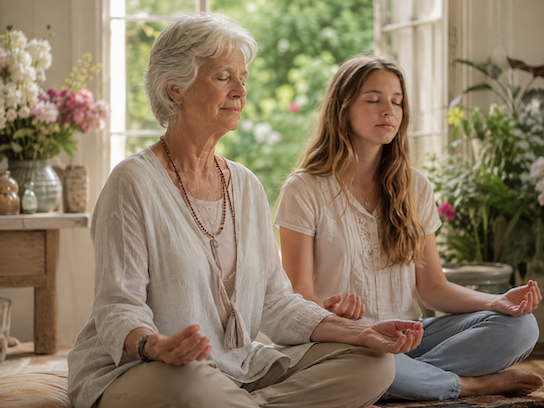 I began meditating most days when I was a teenager, and I learned about this life-changing practice from my grandmother, Fritzie. I do not remember every word she used, but I remember the feeling she gave me: stillness was not empty, frightening or unproductive. It was a place where the heart could settle and the spirit could listen.
At an age when thoughts can race in seventeen directions before breakfast, I discovered that I did not have to chase every one of them. I could sit quietly, breathe, pray and allow the mind to become less crowded. Fritzie helped me understand that we can return to peace the way we return home—not because we never wander, but because we know where home is.
That lesson has stayed with me throughout my life. Meditation has not prevented difficult days, grief, delays or the occasional mysterious technological rebellion. It has helped me meet those experiences from a steadier place. The goal is not to stop every thought. The goal is to stop giving every thought a microphone, a spotlight and a ten-city tour.
Research supports meditation as a useful tool for stress-related concerns. A systematic review and meta-analysis published in JAMA Internal Medicine found that mindfulness meditation programs showed moderate evidence of improvement in anxiety, depression and pain, with more limited evidence for stress and quality-of-life outcomes.[1] Meditation is not a substitute for professional care when it is needed, but it can become a faithful daily companion.
Let the Breath Lead You Home The breath is one of the simplest bridges between a hurried body and a peaceful mind. It is always with us, requires no equipment and does not send a monthly renewal notice.
When upset, many people breathe rapidly and shallowly. Deliberately slowing the breath can help shift attention away from the storm of thoughts and back into the present moment. A review of slow-breathing research described changes involving the autonomic nervous system, heart-rate variability and brain-body regulation, while also noting that the precise mechanisms continue to be studied.[2]
Try this: inhale gently through the nose for a comfortable count of four, pause briefly and exhale for a count of six. Repeat five times without straining. A slightly longer exhalation can feel especially settling. If counting makes you competitive, simply breathe in slowly and breathe out even more slowly. This is not an Olympic event.
One of my favorite prayerful breathing practices comes from Mark 4:39: “Peace, be still.” Breathe in with the word Peace and breathe out with the words be still. Let the phrase move from your mind into your body. You are not ordering the entire world to behave. You are inviting your own spirit to become quiet enough to remember that you are never facing life alone.
Move the Body, Soften the Mind Peace is spiritual and emotional, but it is also physical. A clenched jaw, raised shoulders and tightly folded hands send a very different message than a relaxed face, open chest and easy breath. Sometimes the mind cannot think its way into calm until the body shows it the direction.
Gentle stretching, yoga, tai chi, walking and other mindful movement can release muscular tension and interrupt rumination. A systematic review of randomized studies found preliminary evidence that yoga may support regulation of stress-response systems and reduce anxious and depressive symptoms in varied populations, although the authors called for stronger research.[3]
You do not need to fold yourself into a shape that alarms the furniture. Five minutes of shoulder rolls, side stretches, slow neck movements and an easy forward bend may be enough to change the tone of the moment. Peace often enters through an unclenched body.
Prayer Makes Room for a Wisdom Larger Than Worry
Prayer does not always change circumstances immediately, but it changes the place from which we meet them. It reminds us that we are not required to carry the entire universe on our shoulders before lunch.
In prayer, we can speak honestly: I am afraid. I am tired. I am angry. I need guidance. Help me respond with love. Peace is not pretending everything is fine. It is trusting that even when everything is not fine, we can still be guided, comforted and strengthened.
Silence after prayer matters, too. We are often excellent at presenting God with a detailed memorandum and then leaving the meeting before any response can be felt. Sit for another minute. Listen. Notice. Sometimes the answer arrives as an idea. Sometimes it arrives as courage. Sometimes it arrives simply as enough peace to take the next right step.
Nature Is a Sanctuary Without Walls Nature has always been one of my most powerful sources of renewal. A walk in the Santa Monica Mountains, time near the ocean, a garden alive with birds and butterflies or even a few quiet minutes beneath a tree can restore perspective. The sky reminds us that our current worry is not the entire horizon.
Modern life keeps many people under artificial light, surrounded by screens and separated from the rhythms that once shaped every day. We may know what happened on the other side of the world five minutes ago but fail to notice that a flower opened outside our own door.
A large study of nearly 20,000 adults in England found that spending at least 120 minutes a week in nature was associated with a greater likelihood of reporting good health and high well-being. The pattern appeared whether those minutes came in one longer visit or several shorter ones. Because the study was observational, it cannot prove that nature caused the benefits, but the finding supports what many of us feel instinctively: regular contact with the natural world can be deeply restorative.[4]
Think of nature as a cost-free serenity center. Walk through a park. Sit near water. Garden. Watch clouds. Listen to birds without asking them to lower their volume. Let your eyes rest on green leaves instead of glowing rectangles. The world will survive for twenty minutes without your supervision.
Bare Feet, Open Heart: Earthing and Grounding When it is safe and practical, I also love walking barefoot on natural earth—sand, grass or clean soil. This practice is often called earthing or grounding because the bare skin makes direct contact with the earth.
The immediate benefits are beautifully simple: you slow down, feel temperature and texture, pay attention to each step and reconnect with the living world beneath you. A 2012 review proposed additional physiological effects from direct contact with the earth’s surface electrons, but the studies cited were small and the evidence remains preliminary.[5] Therefore, I view grounding as a gentle nature practice—not a cure, not a replacement for medical treatment and not a reason to stroll barefoot through broken glass in the name of wellness.
Choose a clean, safe place. Walk slowly on a beach or lawn for a few minutes. Feel each foot meet the ground. Breathe. Pray. Let the earth remind you that you belong to creation, not merely to your calendar.
Gratitude Gives the Mind a Better Place to Rest A peaceful life is not built by denying what hurts. It is built by refusing to let pain become the only thing we notice. Gratitude widens the frame.
In experimental studies, Robert Emmons and Michael McCullough asked participants to focus regularly on blessings rather than hassles or neutral events. The gratitude groups showed benefits in aspects of well-being, optimism and daily functioning.[6] Gratitude does not erase sorrow; it prevents sorrow from claiming every room in the house.
At the end of the day, write down three specific gifts: a kind message, warm sunlight, a nourishing meal, a dog’s enthusiastic welcome or the fact that you remembered why you walked into the kitchen. Specific gratitude is powerful because it trains the mind to recognize goodness while it is happening.
When Inner Peace Opens the Door to a Miracle: Betty’s Story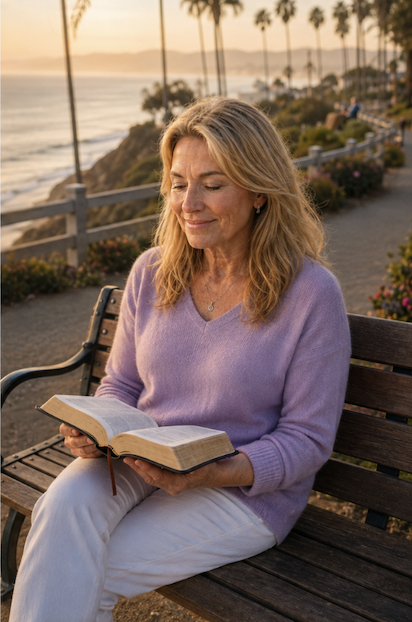 Many years ago, I was walking and exercising on the beautiful bluff in Santa Monica overlooking the Pacific Ocean—a place I often visit for fresh air, movement, prayer and perspective. That morning, I passed a woman in her early sixties sitting alone on a bench facing the water. She was speaking on her cell phone and crying so deeply that my heart immediately went out to her.
I kept walking but quietly asked God, “What should I do? Is there some way I can help?” About ten minutes later, as I returned along the same path, the woman was still on the bench. She was no longer on the phone. She had opened her Bible and was sitting quietly, trying to compose herself.
Something within me said, Sit beside her. I introduced myself and gently asked whether she would like some company. To my surprise, her face brightened with recognition. She had attended one of my talks in Santa Monica the month before but had arrived late and sat in the back row, so I had never seen her. What began as a brief act of concern became a two-hour conversation I have never forgotten.
Her name was Betty. That morning she had received devastating news. Her best friend, Sally, who had lived next door for thirty years, had been hospitalized the week before for something that was not expected to be life-threatening. The call Betty received on the bluff was from Sally’s husband, telling her that Sally had passed away peacefully in her sleep.
Betty was heartbroken, yet she knew Sally’s husband and family would need her. She remained on the bench to read her Bible, pray and gather enough strength to drive to their home and comfort them. Peace does not mean the absence of grief. Sometimes peace is the quiet strength that allows us to stand up inside our sorrow and become a source of comfort for someone else.
Before we parted, Betty and I exchanged telephone numbers and later met for lunch. I learned that she had been adopted as a baby by a loving Southern California couple and grew up as an only child. Like me, she adored nature, hiking and gardening and had led her local garden club for years. She had married her high-school sweetheart, whom she described as the finest man she had ever known, and had lost him three years before we met.
Since childhood, Betty had dreamed of visiting England and touring its famous gardens. She and Sally had planned to take that long-awaited trip together just one month after Sally’s death. Now Betty faced a painful decision: cancel the journey because it would not unfold as planned, or honor the dream they had shared and travel alone. With tears, faith and courage, Betty decided to go. She believed Sally would be with her in spirit. Courage is not the absence of fear or sadness; it is trusting that life may still hold goodness beyond the bend in the road.
I told Betty that I had recently returned from England and had stayed at a charming bed-and-breakfast in the Staffordshire Moorlands near the Derbyshire hills. Next door lived a wonderful gentleman named Ben—an avid collector of classic books and a passionate gardener whose private English garden spread across about three acres.
During my visit, I had spent many happy hours with Ben and his family talking about literature and flowers, playing backgammon and drinking enough afternoon tea to going out on his boat.
I encouraged Betty to stay at the same inn and promised to introduce her to Ben. Then she shared something astonishing. Before her adoptive parents died, they had told her that she had a fraternal twin brother whom she had never met. They believed he had been adopted by another family who later moved to England. Betty had carried the hope of finding him throughout her life and planned to investigate while she was there.
Her planned two-week trip became an extraordinary eight-week journey. She toured the gardens she had dreamed about, loved the inn and felt warmly welcomed by Ben’s family. Most remarkable was the instant connection she and Ben felt when they met. Betty said it was as though she already knew him, and Ben felt the same way.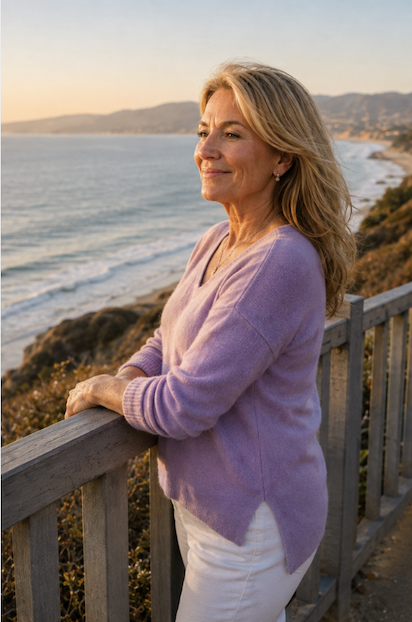 Together, they compared family histories, searched records and arranged DNA testing. The results revealed the nearly unbelievable truth: Ben was Betty’s fraternal twin brother. The man living next door to the very inn I had recommended—the book lover, gardener and friend whose home I had visited—was the brother Betty had yearned to find throughout her life.
The joy of their reunion was beyond words. Ben’s wife, children and grandchildren welcomed Betty with open arms and were over the moon to discover their delightful new relative. Ben invited her to live on his estate so the family could begin making up for some of the decades they had lost.
Within three months of returning to California, Betty sold her Pacific Palisades home and furnishings and moved—lock, stock and barrel—to England. She began a new chapter surrounded by her brother and an extended family she had never known she had. She considered it a miracle and loved every second of her new life with them.
Think of the timing. Had I walked on the bluff a little earlier or later, I might never have seen Betty. Had I ignored the quiet nudge to sit beside her, we would not have spoken. Had she canceled the trip, she might not have met Ben. Had I stayed at a different inn, I would not have known the gardener next door whose identity would change her life.
Some people would call it coincidence. I call it a Godwink—one of those moments when God seems to bring together the right people, places and timing for something extraordinary to unfold, and then quietly remains anonymous.
Betty’s story began with tears on an ocean bluff. It continued through prayer, a brave decision, an open heart and a willingness to walk into an uncertain future. It ended not with the life she had planned, but with a life more astonishing than she could have imagined. This is what inner peace can make possible. Peace does not promise that we will understand every loss or avoid every heartbreak. It gives us enough steadiness to listen for guidance, enough courage to take the next step and enough trust to remain open to blessings we cannot yet see. Even in our hardest seasons, we can be brave, trust that a higher plan may be unfolding and believe that peace and joy can meet us in ways that exceed our most hopeful dreams.
Research on loving-kindness meditation points in a similar direction. In one experimental study, participants who practiced loving-kindness meditation increased positive emotions; those gains were connected with greater perceived social connection and improved vagal tone, a marker related to autonomic regulation.[7] The details of human physiology are complex, but the heart of the lesson is wonderfully clear: the peace we cultivate within can strengthen the way we connect with others—and can help prepare us to recognize and respond to the meaningful moments life places before us.
Humor Is Serenity’s Mischievous Little Helper No article on peace would be complete without humor. Laughter loosens the grip of seriousness and reminds us that not every mistake requires a congressional investigation.
A 2023 systematic review and meta-analysis of interventional studies found that spontaneous laughter was associated with reductions in cortisol compared with control conditions, although the number of studies was modest and more research is needed.[8] In practical terms, a good laugh can help the body stop rehearsing an emergency that may exist mainly in our imagination.
Keep a personal humor file: funny books, favorite films, cartoons, memories, friends who make you laugh and photographs that instantly lift your mood. Learn to laugh at yourself kindly. When you send a text to the wrong person, wear two different socks or search for your glasses while they are on your head, do not declare the day ruined. Declare it material.
Humor does not make light of suffering. It brings light into suffering.
Remember the Practice of PEACE
To make these principles easy to remember, think of the word PEACE: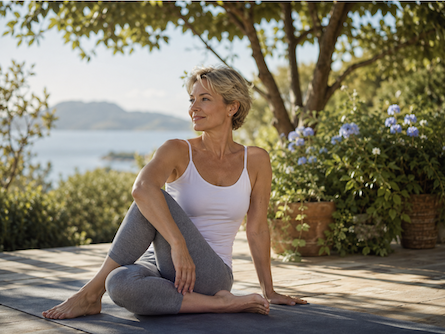 P — Pause, Pray and Practice Presence
Before reacting, stop for one breath. Pray for guidance. Return to what is actually happening now rather than arguing with an imaginary future.
E — Exhale, Ease the Body and Enter Nature
Slow the breath, relax the shoulders, stretch gently and step outside whenever possible. A calmer body gives the mind a better place to live.
A — Accept What Is and Appreciate What Is Good
Acceptance does not mean approval or surrender. It means beginning with reality. Then look deliberately for one blessing that is also true.
C — Choose Compassion, Connection and Cheerfulness
Speak kindly to yourself and others. Reach out instead of withdrawing. Add humor before tension appoints itself chairman of the day.
E — Extend Peace Outward Every Day
Let calm become action: listen, forgive, encourage, apologize, help and create a peaceful emotional climate wherever you go.
Peace is not merely something we feel. It is something we practice, protect and pass along.
Your 12-Item Calm-Down Menu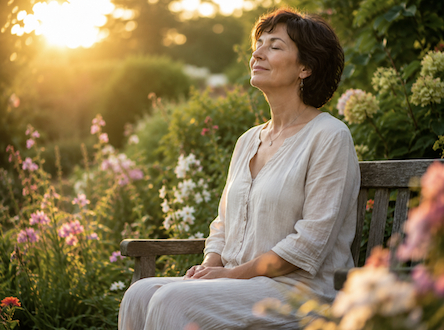 A calm-down menu is a written list of healthy comforts prepared before stress arrives. When the mind is upset, it is not always an inspired event planner. Keep this list on your phone, refrigerator, desk or bathroom mirror—wherever you are most likely to see it before sending a message you may later wish had been eaten by cyberspace.
1. Take Five Slow Breaths. Inhale comfortably and make the exhalation slightly longer. Count only if counting feels calming.
2. Pray a Simple Prayer. Try: Guide my thoughts, soften my heart and help me take the next right step.
3. Meditate for Five Minutes. Sit quietly, notice the breath and gently return whenever the mind wanders—which it will, because it has hobbies.
4. Stretch Away the Tension. Roll the shoulders, open the chest, stretch the sides and release the jaw. Unclench any body part that is behaving as though it owes money.
5. Practice Gentle Yoga or Tai Chi. Choose a few slow movements that coordinate breath, balance and attention. Modify for your body and current health.
6. Take a Nature Walk. Leave the phone in your pocket. Notice five beautiful things: a tree, cloud, flower, bird, breeze or patch of sunlight.
7. Try Safe Earthing or Grounding. Walk barefoot for a few minutes on clean sand, grass or soil. Pay attention to sensation rather than expecting a miracle by Tuesday.
8. Write Three Gratitudes. Be specific. “I am grateful for the warm soup my friend brought” is more powerful than “food is nice.”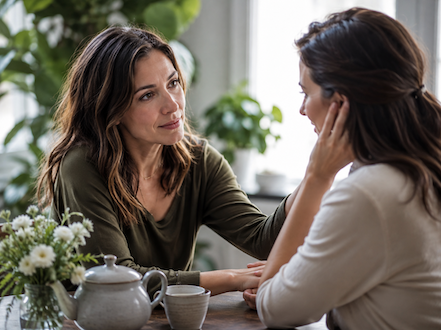 9. Listen to Calming Music. Choose music that slows your breathing and lifts your spirit. Avoid anything that makes you feel you should be fleeing a movie villain.
10. Add a Dose of Humor. Watch a funny clip, read a cartoon or call the friend who can make you laugh without requiring a two-hour backstory.
11. Connect with Someone Safe. Speak with a trusted friend, family member, counselor, spiritual adviser or support person. Calm often grows through caring connection.
12. Offer Kindness. Send encouragement, help a neighbor, pet an animal, water a plant or perform one small act of service. Helping someone else can move attention from helplessness toward meaning.
Build a Daily Peace Practice Before You Need It
Do not wait until you are overwhelmed to begin practicing calm. Build small moments of peace into ordinary days: five minutes of meditation in the morning, a prayer before meals, a short walk after lunch, one gratitude at bedtime and a deliberate pause before difficult conversations.
Choose two items from the Calm-Down Menu and practice them daily for one week. Keep the plan easy enough to succeed. A ten-minute practice done consistently is more valuable than an elaborate wellness ritual that requires imported cushions, perfect weather and a personal assistant. Also protect the foundations of peace: restorative sleep, nourishing food, regular movement, meaningful relationships, healthy boundaries and professional help when emotional distress is persistent or severe. Inner peace is not a demand to handle everything alone. Sometimes the most peaceful step is asking for support.
Notice your triggers without criticizing yourself. Ask: What happens in my body? What story does my mind begin telling? Which peaceful response could I practice sooner next time? Awareness turns repeated reactions into opportunities for growth.
Let Your Peace Become a Blessing
We cannot single-handedly create world peace, but we can create peace in the square foot of earth we occupy. We can lower our voice. We can listen without preparing a rebuttal. We can refuse to pass along gossip, fear or cruelty. We can apologize quickly, forgive wisely, laugh warmly and leave people feeling better than we found them.
A peaceful person is not weak. It takes strength to remain kind when others are sharp, to remain grounded when life is uncertain and to remain hopeful when the headlines seem determined to audition for a disaster film.
My wish for you is that you create a quiet sanctuary within yourself—a place of faith, breath, gratitude, humor and love that you can visit every day. From that sanctuary, may your words become gentler, your choices wiser and your presence more healing.
Peace begins quietly within us. Then it travels—through a smile, a prayer, a patient response, a generous act and a calm heart that gives another heart permission to soften. Perhaps this is the harmony God intended for His creation: His peace within each of us becoming love shared among us all.
Notes [1] Madhav Goyal and colleagues, “Meditation Programs for Psychological Stress and Well-being: A Systematic Review and Meta-analysis,” JAMA Internal Medicine 174, no. 3 (2014): 357–368. doi: 10.1001/jamainternmed.2013.13018.
[2] Andrea Zaccaro and colleagues, “How Breath-Control Can Change Your Life: A Systematic Review on Psycho-Physiological Correlates of Slow Breathing,” Frontiers in Human Neuroscience 12 (2018): 353. doi: 10.3389/fnhum.2018.00353.
[3] Michaela C. Pascoe and Isabelle E. Bauer, “A Systematic Review of Randomised Control Trials on the Effects of Yoga on Stress Measures and Mood,” Journal of Psychiatric Research 68 (2015): 270–282. doi: 10.1016/j.jpsychires.2015.07.013.
[4] Mathew P. White and colleagues, “Spending at Least 120 Minutes a Week in Nature Is Associated with Good Health and Wellbeing,” Scientific Reports 9 (2019): 7730. doi: 10.1038/s41598-019-44097-3.
[5] Gaétan Chevalier, Stephen T. Sinatra, James L. Oschman, Karol Sokal and Pawel Sokal, “Earthing: Health Implications of Reconnecting the Human Body to the Earth’s Surface Electrons,” Journal of Environmental and Public Health 2012 (2012): 291541. doi: 10.1155/2012/291541. [6] Robert A. Emmons and Michael E. McCullough, “Counting Blessings Versus Burdens: An Experimental Investigation of Gratitude and Subjective Well-Being in Daily Life,” Journal of Personality and Social Psychology 84, no. 2 (2003): 377–389. doi: 10.1037/0022-3514.84.2.377.
[7] Bethany E. Kok and colleagues, “How Positive Emotions Build Physical Health: Perceived Positive Social Connections Account for the Upward Spiral Between Positive Emotions and Vagal Tone,” Psychological Science 24, no. 7 (2013): 1123–1132. doi: 10.1177/0956797612470827.
[8] Caroline K. Kramer and Camila B. Leitao, “Laughter as Medicine: A Systematic Review and Meta-analysis of Interventional Studies Evaluating the Impact of Spontaneous Laughter on Cortisol Levels,” PLOS ONE 18, no. 5 (2023): e0286260. doi: 10.1371/journal.pone.0286260.