

GOOD VIBRATIONS! Shake Up Your Fitness, Strength & Vitality
Blog Tag
A Fun, Practical Guide to Whole-Body Vibration Exercise
 For more info on vibration exercise and high-level wellness in general, please refer to my books UPLIFTED and WONDERRUL WELLNESS: Enjoy Daily Vim, Verve & Vigor.
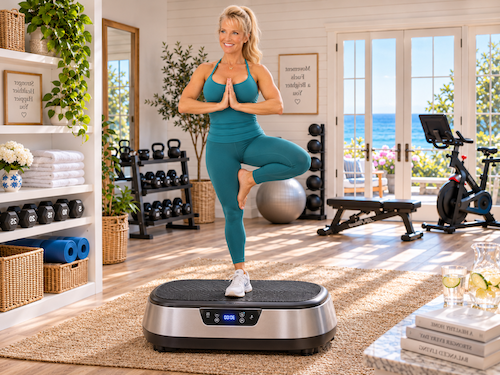
Ready to put a little shake, rattle, and roll into your wellness routine—without joining a rock band? Meet the vibration plate, a compact fitness device that makes exercise feel surprisingly different. Step onto its gently moving platform, bend your knees slightly, and your muscles respond to the vibrations with rapid contractions. It might look like an ordinary piece of home-gym equipment, but it can add a refreshing twist to familiar movements.
The best fitness routine is the one we actually do—not the one we admire from the sofa while eating popcorn! Whole-body vibration can add variety to walking, strength training, and stretching.
What Exactly Is a Vibration Plate?
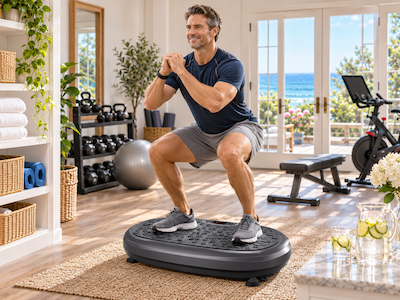 A vibration plate is a powered platform that produces small, repeated movements under your feet. Depending on the design, it may move up and down, tilt from side to side, or use another vibration pattern. Your body works to respond and stay steady. How much you feel—and which muscles engage—depends on the plate’s settings, your posture, and the exercise you perform.
A vibration plate is no substitute for movement, balanced meals, or sleep. If it were, I'd put one in front of every television and declare the couch retired!
Why People Are Talking About Good Vibrations
Muscles and strength: The repeated motion can recruit muscles in the legs and trunk. Some studies suggest that vibration training may modestly improve certain strength measures, particularly in older adults or people with limited mobility. Traditional resistance training remains important, however, especially for building and maintaining muscle.
 Balance and stability: Holding a steady position on a moving surface challenges your body’s sense of position, called proprioception. Certain vibration programs have shown benefits for balance and walking performance, although results vary. Better balance is a worthy goal at every age; nobody wants to discover that their socks and kitchen floor have secretly formed a skating rink!
Bone health: Researchers have explored whether regular vibration training can help support bone density. Some studies report improvements at particular skeletal sites, while others find little or no effect. Think of it as a possible complement—not a proven replacement—for weight-bearing exercise, appropriate strength training, good nutrition, or prescribed osteoporosis care.
 Circulation and comfortable movement: The rhythmic motion may temporarily influence blood flow and make muscles feel more awake. Some people enjoy it as part of their warm-up or cool-down. Claims that a plate cures arthritis, melts away inflammation, or dramatically improves circulation are much stronger than the evidence supports.
Flexibility and recovery: A brief, comfortable session may help you feel ready to stretch or move, though lasting flexibility still requires regular mobility work. If gentle vibration feels pleasant after activity, wonderful—but pain or dizziness is your body's way of saying, “Please change the channel!”
Weight management and stress: Movement can contribute to energy expenditure and a satisfying exercise habit. Yet standing on a vibration plate alone is unlikely to produce meaningful weight loss. And while the experience may feel relaxing for some people, it isn't an established treatment for anxiety or high blood pressure.
 Fascia Flexibility: Using a vibration plate for exercise can enhance fascia health and flexibility by promoting muscle contractions and improving circulation. The vibrations stimulate the fascia, helping to maintain its hydration and elasticity, which is crucial for overall musculoskeletal health.
Enhanced Lymphatic Drainage: Vibration therapy can stimulate the lymphatic system, helping to remove toxins and waste products from the body, thus supporting overall immune function and detoxification. However, this is an area that still needs more research to back it all up.
How I Like to Mix Things Up
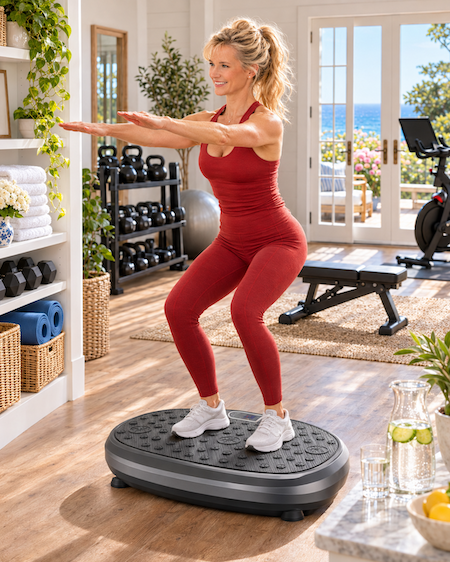
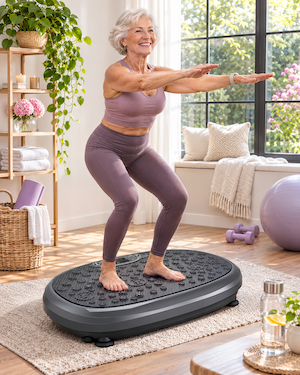
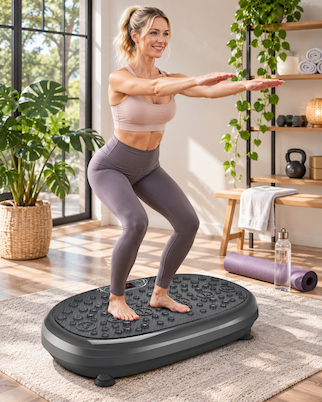
My own vibration-plate routine is about variety. Rather than simply standing there, I enjoy experimenting with familiar exercises, always adjusting for comfort and good form. A soft-kneed standing position can be a simple starting point. From there, a shallow squat may engage the legs more actively; slow movements make it easier to stay controlled.
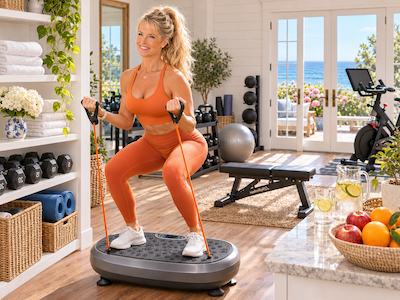
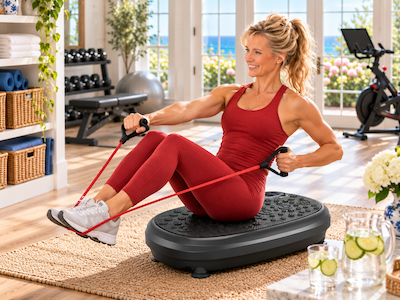
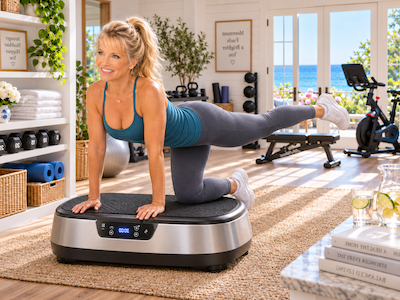
 I also enjoy combining the plate with light upper-body weights, provided I feel stable and can keep my form. A resistance band can offer another option. I sometimes use the plate while seated for abdominal work, position my feet on it when sitting at my desk, or explore supported plank variations. These are more advanced setups, and they are not appropriate on every model; check the device instructions and get professional guidance before trying them.
Choose quality over novelty. Your fitness equipment should challenge your muscles—not your life insurance policy!
A Simple Way to Begin
First, choose a sturdy, level surface with space around the machine. Wear suitable shoes if the manufacturer recommends them (I often use it barefoot), and keep a stable chair or handrail nearby for support. Begin at the lowest comfortable setting and use a short session rather than jumping straight into an intense workout.
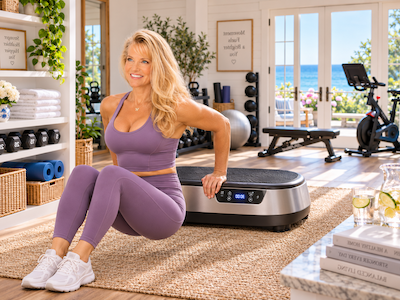 Stand with feet comfortably apart and knees gently bent, not locked. Breathe normally, stay upright, and avoid forcing a deep squat. Once you know how your body responds, you may add carefully controlled movements appropriate to your ability and the manufacturer's guidance. Consistency matters far more than speed or an impressive display of buttons.
Safety First—Because Wellness Should Feel Good
Vibration plates are not suitable for everyone. Seek medical guidance before use if you are pregnant, recovering from surgery, have a recent fracture or joint injury, significant balance problems, an implanted medical device, certain eye conditions, or another medical concern. If you have osteoporosis, back problems, or persistent pain, ask whether vibration training is appropriate for you.
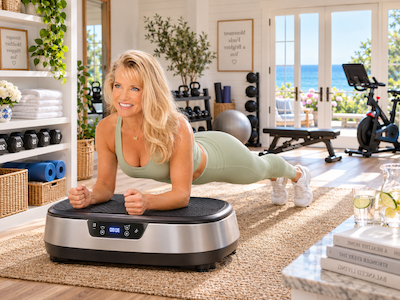 Follow the particular device's age restrictions and weight limits. One person at a time; no jumping on the platform. Stop immediately if you feel dizzy, unusually tired, nauseated, unsteady, or in pain. For beginners, especially older adults, a physical therapist or qualified exercise professional can help select safe positions and settings.
Convenience and Accessibility: One of the biggest attractions is convenience. A compact vibration plate can fit into a home exercise area, offering another way to move without scheduling a trip to the gym. Before buying, compare platform stability, available speeds, noise, weight capacity, warranty, clear safety instructions, and whether the model suits your goals.
Keep walking, stretching, strength training, eating wholesome foods, and making time for rest and laughter. Let the plate be one more tool in that uplifting routine.
My Invitation: Start where you are, stay curious, and make movement something to look forward to. Good health isn't built in a single dramatic workout; it's created through small, loving choices repeated day after day. And if your exercise equipment happens to make you smile while you shake things up, so much the better!